
Last updated November 17, 2026
 Home additions & ADU
 Kitchen remodeling
 Bathroom remodeling
 Roofing
 Windows & doors
 Driveway & pavers
 Fence
Free written scope consultation - allowances, timeline, and change-order rules on paper before a single trade is scheduled
Construction Warning Signs: A Yorba Linda Homeowner’s Reference Guide
A hairline crack in stucco that runs diagonally from a window corner isn’t a cosmetic imperfection. It’s one of the most reliable early indicators of foundation movement or framing settlement, and in Yorba Linda’s expansive clay soil zones, it’s something every homeowner should know how to read. Most construction failures announce themselves quietly, long before the expensive damage shows up. The dramatic signals homeowners watch for – a sagging ceiling, a leaking roof, a fence on the ground – are late-stage events. This guide trains you to spot the subtle, slow-moving signals that show up in Yorba Linda’s climate and construction era, and to document them in a way a contractor can actually assess.
Quick Answer
Construction warning signs in a Yorba Linda home are almost always small and slow: diagonal stucco cracks at window and door corners, granular loss and lifted ridge caps on roofs, gate sag and post lean on wood fences, and doors or windows that suddenly bind. Width, pattern, and location tell you whether a signal is cosmetic or structural, and you can assess all three before calling anyone. If a crack is wider than a quarter inch, if a door has been sticking for months, or if a fence post moves when you push it, that’s the point to bring in a trained professional for a written assessment.
Styles & brands we work with
- Kitchen remodeling
- Bathroom remodeling
- Home additions & ADU
- Roofing
- Windows & doors
- Driveway & pavers
- Fence
Table of Contents
- How to Read Stucco Cracking: Cosmetic vs. Structural
- Roof Warning Signs That Precede a Leak by 12-18 Months
- What Your Wood Fence and Gate Are Telling You About Soil Movement
- Interior Warning Signs That Map to Exterior Problems
- How to Photograph Warning Signs So a Contractor Can Assess Them Remotely
- Seasonal Signs of a Sound Home
- When a Warning Sign Means a Full Exterior Replacement
How to Read Stucco Cracking: Cosmetic vs. Structural
Stucco is how most of Yorba Linda’s homes are clad, and it cracks. That’s expected. What matters is reading the crack – its width, pattern, and location – because those three factors tell you whether the stucco is shedding normal stress or reporting a problem behind it.
Cracks fall into two broad groups. Cosmetic cracks are the network of fine lines you’ll find in almost any stucco field, especially on south- and west-facing walls under strong inland sun. Hairline crazing, plaster spidering where panels meet, and short vertical cracks in the middle of a large wall are all normal. Structural indicators are different: they’re wider, they run in a direction that follows the framing, and they originate at corners where stress concentrates.
Three tests, in order:
- Width. Use a crack gauge or a piece of paper as a rough comparison. Hairline cracks are cosmetic. A crack wider than a quarter inch, or a crack that widens over time, is worth an assessment. Cracks that let daylight or moisture through are always worth an assessment.
- Pattern. Diagonal cracks that run from the upper corners of a window or door toward the ceiling are the classic sign of settlement or framing movement. Stair-step diagonal cracks are a similar signal. Horizontal cracks that follow a foundation line or a floor line are less common in stucco and deserve a closer look.
- Location. Cracks at window and door corners, at wall corners, and above large openings are the most informative. A crack in the middle of a big uninterrupted wall is usually cosmetic.
Yorba Linda’s clay soil is the wild card. Expansive clay swells and shrinks with moisture, and that movement pushes on foundations and pier systems. In the dry season, the soil shrinks and the house shifts; in a wet winter, it swells again. A single crack that appears one summer and stays put is a different sign from a crack that opens and closes over several seasons. If you’re seeing seasonal movement in your stucco, that’s the pattern to track with photographs.
When the cracking is more than cosmetic – when it’s paired with a sticking door or a sloping floor, or it keeps opening after repairs – it’s time for a structural assessment. A contractor who handles exterior work across the property will often spot the connection between stucco cracking and a related trade problem, and can coordinate the repair under one scope. If you’re planning a broader exterior project, this is the natural entry point into a conversation about Construction Yorba Linda and the trade categories involved.
Roof Warning Signs That Precede a Leak by 12-18 Months
Roof failures are slow. The sun and the seasons degrade asphalt shingles in stages, and most of what matters happens in a year or more before the first drop of water appears in your ceiling. Yorba Linda’s inland UV exposure speeds this up – the sun is the primary damage agent on a roof here, more than rain or wind.
Roof warning signs are best read as a tiered list of severity:
- Granule loss. Granules are the mineral coat on top of asphalt shingles that blocks UV. When they wear off, shingle surfaces go from textured to smooth, and often darker in patches. Granule loss in a scattered pattern is normal aging; concentrated loss along the ridge, at the sun-facing slope, or in distinct rectangles is a sign the shingle is failing. You’ll sometimes see granules collecting in gutters and at downspout outlets – that’s confirmation the roof is shedding its UV coat.
- Ridge cap separation. The ridge caps – the shingles bent over the peak – are held by a different nailing pattern than the field. When they begin to lift or crack, wind-driven rain has a way into the top of the roof, and the leak path is usually not above where you see the stain.
- Flashing lift. Flashing is the metal that seals roof edges, valleys, and penetrations. One of the most-missed flashing spots is where stucco meets roof, because the metal is partly hidden. Lift the flashing and water gets behind it. Lifted edge flashing shows up as a small gap or a visible curve at the roof edge that wasn’t there before.
- Blisters and bubbles. Raised, soft spots in the shingle field mean the bond between mat and asphalt has failed, and the shingle is on its way out.
- Ceiling or attic staining. A water stain in a ceiling or on a rafter is a late confirmation. The roof was failing before the stain appeared; the stain is the announcement.
The value of reading these early signs is time. A roof that’s showing granule loss and ridge cap separation but hasn’t leaked is a roof you can plan for – the whole exterior can be replaced with the shingle line, warranty tier, and color you choose, instead of choosing under pressure. That’s the difference between “your brand, your budget” and “whatever is available the week the ceiling opens.” If tile or composition is on the table, a full exterior scope handles roofing, siding, windows, and gutters together so the roof replacement doesn’t leave a flashing problem for next year. Roofing is one of the seven trades we handle under one contractor, and exterior scopes are the ones where the trades connect most.
What Your Wood Fence and Gate Are Telling You About Soil Movement
A wood fence and gate are an instrument. They’re the one feature on the property that shows you what’s happening at the ground level, because the posts sit in concrete footings and the panels above them respond to every shift. If you want to know how a Yorba Linda yard is behaving, watch the fence.
Wood fence warning signs, ranked by what they usually mean:
- Gate sag. The gate drops slowly because the hinge post is moving, or because the frame has racked out of square. A gate that swings shut on its own and then won’t stay open is usually telling you the hinge post has shifted. Check whether the post has a shim at the bottom or a gap where it meets the footing.
- Post lean. Push a post. All wood posts have a little flex; if a post moves more than a fraction of an inch at the top, or if the post is visibly out of plumb, the footing is failing. In clay soil, this is often the first sign the soil under a concrete footing is shrinking or heaving with the seasons.
- Board separation. Gap at the bottom of a board, a board that’s pulling loose at one end, or a picket that’s cracked at a nail point. Some of this is wood drying and is normal; some of it is the rail being pushed by a moving post.
- Racking. The whole fence line leaning slightly in one direction over a run. Look at the fence against a straight edge, like the roof of a distant house, to see the lean. A long slope of lean tells you the soil at the bottom of several footings is behaving in a way it shouldn’t.
- Uneven post tops. If post tops used to line up and now they don’t, the ground beneath them has moved.
The clay soil pattern in Yorba Linda means a fence that has moved is not always a fence in crisis – it can be a fence that has done its job and should be replaced with better footing design. The most direct fix is a re-set or new install done right, and the choice of material matters. A wood fence can be rebuilt with new posts and footings; a fence replacement in a vinyl or ornamental steel system avoids the same movement because the footings are spec’d differently and the material doesn’t rack. We handle fencing across the property – gates, driveways, and property lines – alongside every other outside trade. To talk through your options or see material lines from Master Halco, Ameristar, and Bufftech, use our fence installation page.
Interior Warning Signs That Map to Exterior Problems
Homeowners read interior symptoms as house-settling, which they often blame on age. Sometimes that’s right. But a cluster of interior clues usually points to something more specific, and the point is to map interior clues to the exterior cause before the problem gets bigger.
Four interior signs and what they usually map to:
- Doors that bind or won’t latch. A door that has started to stick at the top or scrape at the bottom is reading the framing. In a consistent pattern (several doors all binding in the same direction), the house is out of level at the wall line. That points to foundation or soil movement under one side of the house. If the jambs are out of plumb, the wall has moved, not just the door. Look for a door that once closed cleanly and now needs a shove.
- Windows that bind. Windows work the same way as doors: sticking, scraping, or latch failures are a reading of the frame. Windows at the corners of the house are the first to show, because they sit on the same load path as the corner framing. A window that’s been fine for years and now won’t open is telling you the wall behind the frame has changed shape slightly.
- Drywall cracks at corners. Cracks radiating from door and window corners, ceiling corners, or the corner joints of two walls. These are the interior version of the exterior stucco crack at the same corner. Looking at both together – the exterior stucco crack and the interior drywall crack at the same corner – gives you a diagonal line through the house that is far more diagnostic than either one alone.
- Floor slope. A subtle slope that you notice only when a ball rolls, when water runs toward a wall, or when a level reads different at one end of a room. Floor slope from construction isn’t unusual, but a floor that has changed over time is a different sign. Photograph a marble or a level on the floor at the same spot each season to see if it moves.
These signs are also how you distinguish between an exterior cladding issue and a structural one. When a stucco crack appears, the interior condition on the other side of that wall is the tiebreaker. Both point to a scope that spans trades, and that’s exactly the kind of project a single contractor can hold together. Kitchen and bathroom remodels are where these interior clues most often surface, because the walls are open. When they do, you’ll want a contractor who can also handle the exterior side – roofing, windows, and fences – in one scope. If a full remodel is on your list, our home additions & ADU team handles the structural scope and can look at interior signs and exterior construction together.
How to Photograph Warning Signs So a Contractor Can Assess Them Remotely
The most useful thing you can do for a contractor before a site visit is to document the signs correctly. A crack photographed with a thumb in frame and no reference is impossible to evaluate. A crack photographed with a tape measure across it, in context, and viewed from a consistent angle is something a contractor can read in a minute. That’s how you get a straight answer on the phone, before anyone walks the property.
Follow this sequence for each warning sign:
- Take a wide shot first. Step back until the whole wall, roofline, or fence run is in frame. The wide shot shows the pattern – where the crack runs relative to corners, windows, and doors. This is the photo contractors read first.
- Take a close shot second. Move in so the crack or damage fills the frame. Include something for scale: a quarter, a tape measure, a coin, or a ruler laid across the crack. A crack with a scale is measurable; a crack without one is a guess.
- Photograph the interior and exterior at the same location. If the warning sign is a corner crack, photograph the inside of that same corner. This pairing is the single most useful documentation you can send, because it lets the contractor read the wall through the house.
- Track it over time. Re-photograph the same sign from the same position and angle once a month, or once a season, and store the dates. Write a small date note in the corner of the frame, or keep the file dates. The pattern of movement over a year – opening, closing, or stable – matters more than any single photo.
- Note the time and weather. If it’s a rainy season crack or a hatch in the dry season, say so. A crack that changes with the weather is a crack telling you about moisture in the soil, and that single note changes the assessment.
- Send the whole set. A contractor who has the wide, the close, the interior, and the dates can often confirm whether a site visit is urgent or whether the repair can wait for the next exterior project. That’s a useful answer either way.
A well-documented set also makes a written estimate more accurate. When your contractor sees exactly what’s moving, they can quote the right fix and the right scope, instead of quoting the largest hypothetical. Free estimates are the starting point for every job – one of the reasons we ask for photos first is that a straight answer and a written line-item quote are easier to give with a visual record in hand. Whether your project is exterior work or a full interior overhaul, our driveway & pavers and other trade pages show what a documented scope looks like across each trade.
Seasonal Signs of a Sound Home
A home in good condition gives you the same signals every season. That baseline – what a healthy house looks like in Yorba Linda – is what makes the warning signs readable at all. If you know what normal looks like, you can recognize abnormal the moment it appears.
A sound home going into a dry season:
- Stucco with no diagonal cracks at openings, just fine cosmetic lines in the field.
- Shingle surfaces with a consistent texture and no bare patches.
- Ridge caps flat and unbroken.
- Fence posts that don’t flex when pushed, with gate hardware that doesn’t need adjustment.
- Doors that latch with the same effort they always did.
- Windows that open and close smoothly.
- Floors with no visible slope change.
A sound home going into a wet season:
- No new water staining on ceilings, beams, or the interior of stucco at roof lines.
- No rust or water standing at flashing edges.
- Drainage moving water away from the foundation, not pooling at the base of a wall.
- No new cracks appearing where the dry season left the house.
Yorba Linda’s seasons are mostly dry and mild, which means the wet months are actually the diagnostic months. The water finds the failures that the sun created. If a wall crack or a roof flashing issue is going to show itself, it will happen in the wet season. Walk the property once in the dry season and once after the first significant rain, and compare the notes. That’s the discipline.
If the seasonal comparison shows the house is in good order, that’s the moment to plan ahead – a new roof, exterior windows, a fence replacement, or a paver driveway, done with the material and brand you want instead of the one your contractor happens to keep. Our team works across every area listed in Construction Yorba Linda, and materials from brands like Belgard, Tremron, and Cambridge Pavers are chosen per project.
When a Warning Sign Means a Full Exterior Replacement
Some warning signs are point fixes – one cracked stucco repair, one flashed valley, one gate hinge re-set. Others are the first sign the whole exterior is due. Recognizing the difference keeps you from overbuying and keeps you from underbuying.
The signal that a full exterior replacement is appropriate:
- Multiple trade failures at once. Roof granules gone, fence posts moving, stucco diagonal cracks, windows binding – all on the same elevation or the same wall line. The common cause is soil movement or moisture behavior under one side of the house, and the point fix on each trade in isolation won’t address the cause.
- Repairs that don’t hold. A roof patch that leaks again the next season, or a stucco patch that re-cracks a year later. The underlying substrate is still moving. A replacement scope can address that.
- Age with exposure. Shingles that have lost their UV coat across the whole field, window seals that have failed, and siding that’s begun to chalk or check. When the age and the sun exposure have used up the material, replacing is the honest answer.
- The junction is the failure point. The flashing, the valley, the edge of the stucco, the top of the fence against the wall – these junctions are where trades meet. A replacement that specs every trade together resolves the junction; a piecemeal replacement leaves it.
This is the scope our company was built around. One contractor, every trade: the roofing, the stucco, the windows and doors, the fence, the paver driveway, and the interior work all spec’d to one standard. You choose the brand – our materials access includes roofing from GAF, CertainTeed, and Owens Corning, windows and doors from PGT, Therma-Tru, and ECO Window Systems, and paver lines from Tremron, Techo-Bloc, and Cambridge Pavers – and we handle the installation. Specifications are held to your standard, not ours. A full exterior replacement that holds the junctions together is the project that removes the risk of a misaligned handoff, which is the way most exterior projects go wrong when several vendors are involved. Talk through the scope on the trade pages that match your project, or read about the full service lineup at Construction Yorba Linda. Our technicians have up to 9 years of experience, and estimates are free.
Common Mistakes to Avoid
- Diagnosing a crack by width alone. A wide crack in the middle of a wall is often less important than a narrow crack that runs diagonally from a window corner. Read width, pattern, and location together, and photograph the same sign over a season – that pattern is the diagnosis.
- Fixing the stucco before reading the movement. Patching a stucco crack that’s caused by a moving footing hides the evidence and lets the problem continue. If the crack re-cracks after the patch, treat it as a signal to look deeper before patching again.
- Waiting for a leak before addressing the roof. Granule loss and ridge cap separation precede leaks by a year to 18 months. A roof showing those signs but no water is a roof you can plan a replacement for, which puts the material and brand choice back in your hands.
- Ignoring the fence because it still stands. A fence is a ground-level instrument. A post that moves, a gate that sags, and a rail that separates are telling you what the soil is doing – information you can use, not just an aesthetic issue.
- Assuming a sticking door is just an old door. Doors that bind and windows that scrape are reading the framing. When several doors and windows bind in the same direction, that’s a house reading, not a door problem.
- Documenting without scale or context. A crack photo without a reference measurement or a wider view of the wall tells a contractor less than a single phone call. Shoot wide, close, inside, and across time.
- Letting several trades become several vendors. The failure points in exterior work are the junctions – where the roof meets the stucco, where the fence meets the wall, where the siding meets the window. One contractor across the trades keeps the junctions aligned. A piecemeal scope usually doesn’t.
See the difference
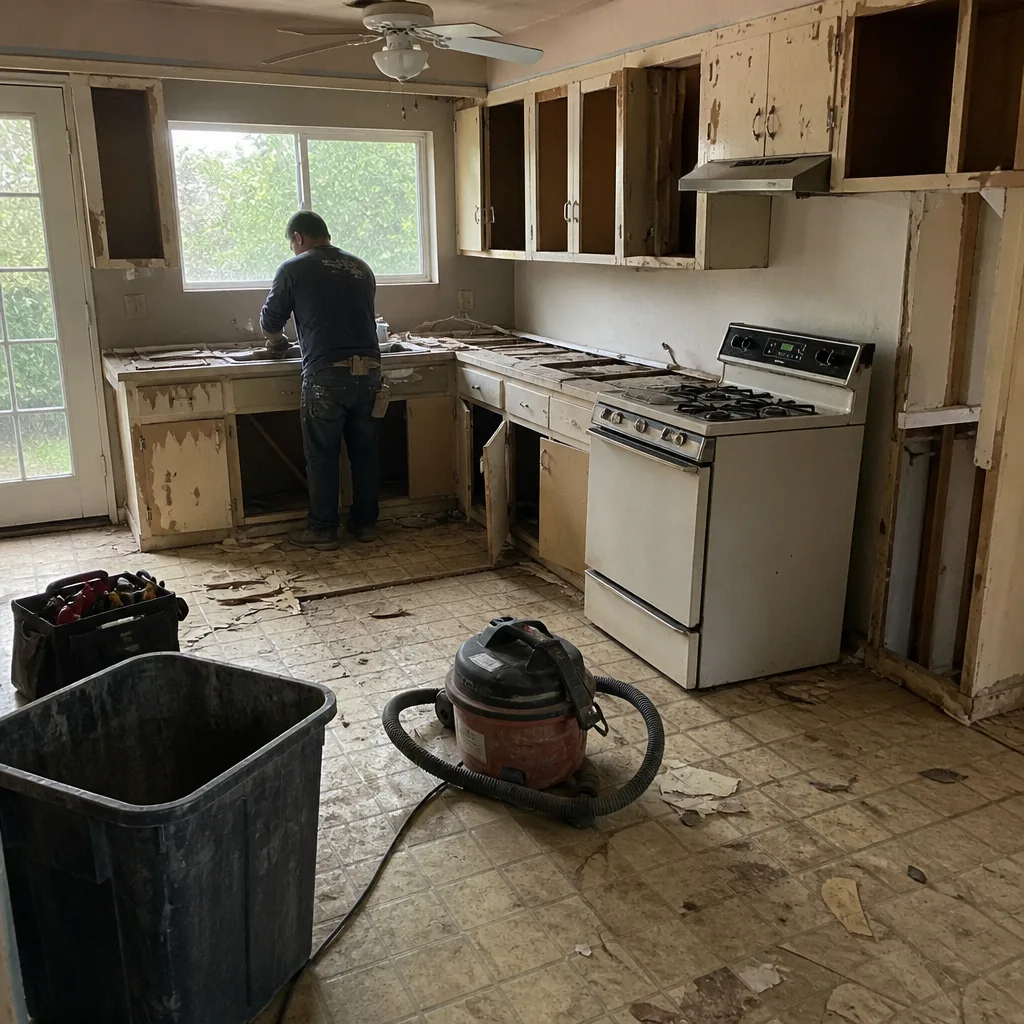 Before
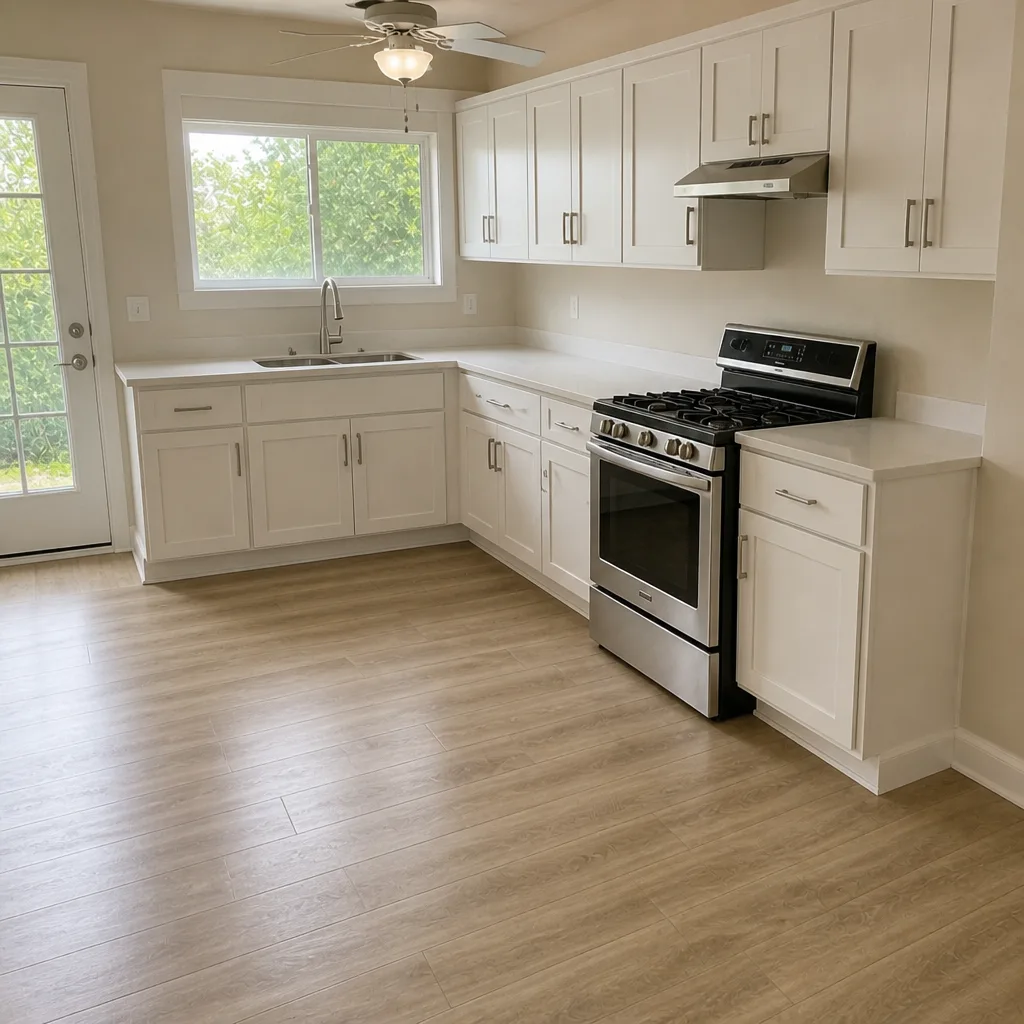 After
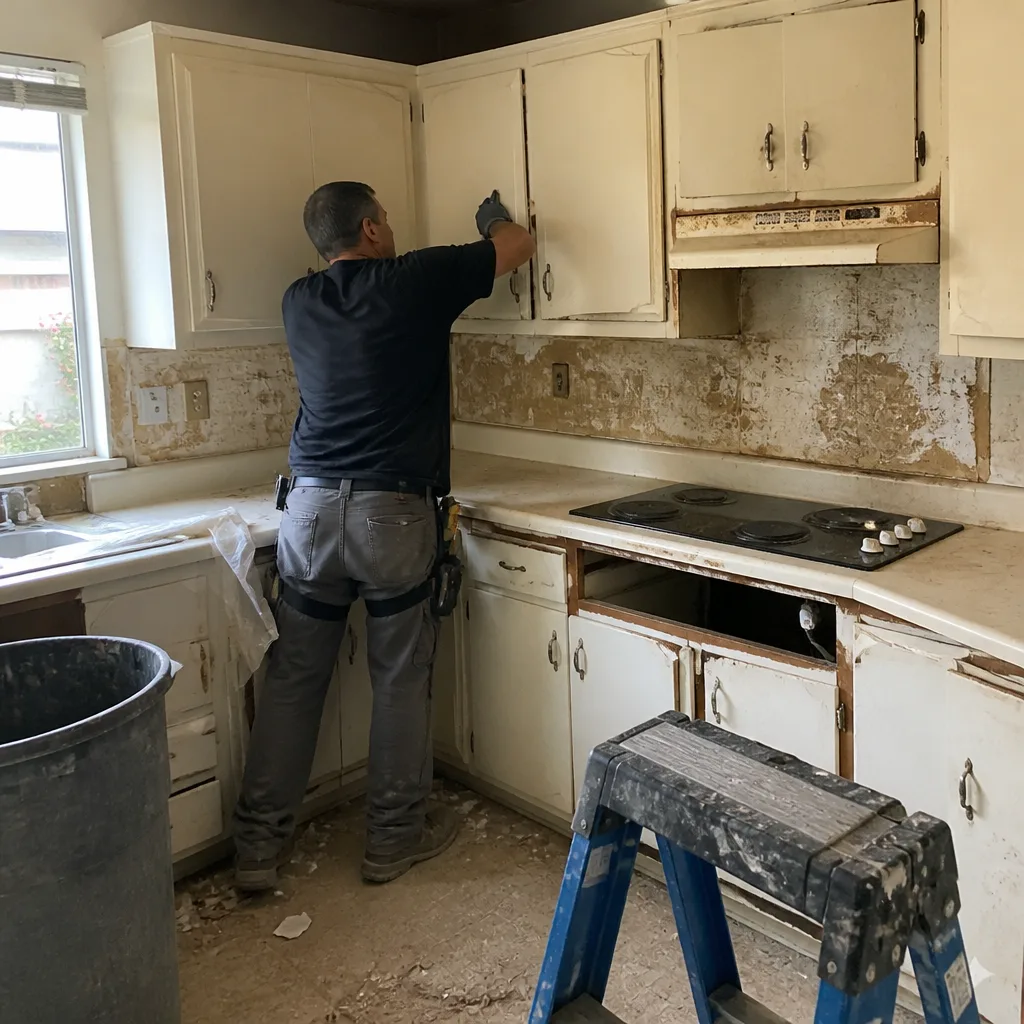 Before
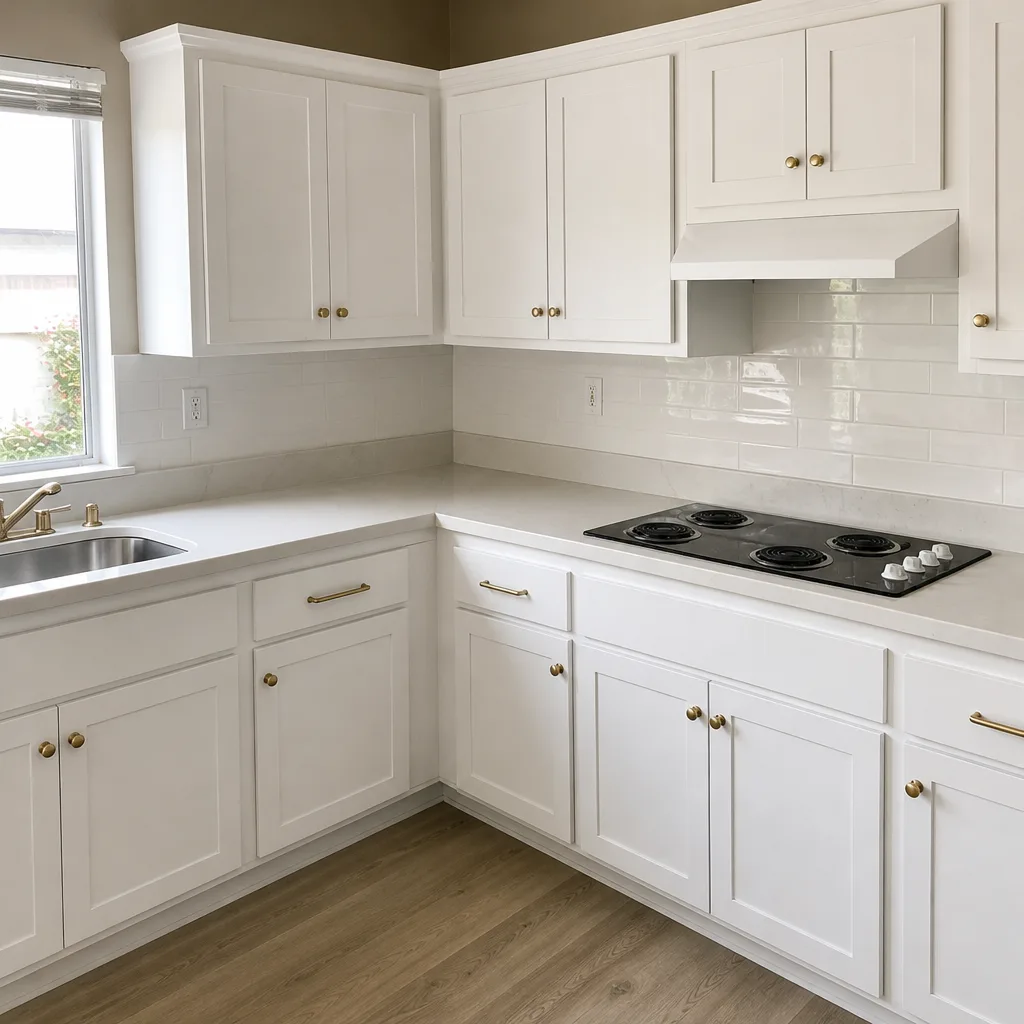 After
 Before
 After
When to Call a Professional
Call a trained professional if a stucco crack is wider than a quarter inch, if a crack is letting daylight or moisture through, or if the same crack has re-opened after repair. Call if a door has been binding for months or a window won’t open cleanly, if several openings are binding in the same direction, or if the floor has developed a visible slope or a level reading that’s changing. Call if a gate sags, a post moves when pushed, or a fence run shows a lean. Call for a roof showing granule loss, ridge cap separation, lifted flashing, or a soft spot in the field, and for any ceiling or rafter staining. Roof flashing, ridge caps, and structural movement involve work at height and should be handled by trained professionals, not by the homeowner. Construction Yorba Linda offers free estimates in Yorba Linda and can review your photos before scheduling a visit. Call (888) 356-5940. We answer 24/7. Fast dispatch from 7am to 7pm, Sunday through Friday.
Frequently Asked Questions
A crack wider than a quarter inch, or a diagonal crack that runs from a window or door corner, is a structural indicator worth an assessment; fine field crazing and hairline lines on a wall are cosmetic. Read the width, the pattern, and the location together, and track the crack over a season. In Yorba Linda’s expansive clay soil, a crack that opens and closes with the seasons is a movement sign, while a stable cosmetic line is not. If you’re unsure, photograph it properly and call (888) 356-5940 for a free assessment.
Granule loss, ridge cap separation, and lifted flashing typically show up 12 to 18 months before water appears inside. That gap is your planning window. A roof that’s shedding its UV coat but not leaking yet can be replaced with your choice of shingle, color, and warranty tier from our access to GAF, CertainTeed, and Owens Corning – instead of whatever is available when a ceiling stain appears. Call (888) 356-5940 to review photos of your roof and get an honest read.
A gate that sags is usually reporting that the hinge post has moved, and in Yorba Linda’s clay soil, that movement often means the concrete footing below it has been pushed by seasonal soil expansion. Push the post to see if it flexes; a post that moves is a footing issue, not a hardware issue. A new install with properly spec’d footings and a material that doesn’t rack – wood, vinyl, or ornamental steel – is the durable fix. Call (888) 356-5940 for a fence estimate.
Several doors and windows that bind in the same direction point to the house framing, not the door. A single door that sticks is usually the door. When the interior clues – binding doors, binding windows, drywall cracks at corners – all line up on the same side of the house, the wall line has moved. That’s the point to get a professional read on the exterior cause. Call (888) 356-5940 for a free estimate that looks at interior and exterior together.
Take a wide shot showing the whole wall or fence run, then a close shot with a tape measure across the crack, then the interior side of the same corner, and repeat the same photo every month or season. The wide shot shows the pattern; the scale shows the width; the interior pairing shows the wall’s response. A contractor can read all four and often give you a straight answer on the phone. Call (888) 356-5940 to have your photos reviewed.
When multiple trades are failing together – roofing, stucco, fences, and windows on the same elevation – or when a repair doesn’t hold and re-fails, a full exterior scope is appropriate. A piecemeal repair leaves the junctions between trades as the failure point. A single contractor across the whole exterior specs every junction together and holds the scope to one standard. Call (888) 356-5940 to talk through a full exterior replacement estimate.
The Bottom Line
Construction warning signs in Yorba Linda are almost always quiet and slow. Read the diagonal stucco crack at a window corner as a movement signal, not a cosmetic one. Watch the roof for granule loss, ridge cap separation, and lifted flashing, because those precede a leak by a year to 18 months. Watch the fence and gate as a ground-level instrument for what the clay soil is doing. Map interior clues – binding doors, binding windows, drywall cracks, floor slope – to their exterior cause. And document everything correctly, wide, close, inside, and across time, so a contractor can give you a straight answer before the visit. When one sign becomes several across the same elevation, or a repair doesn’t hold, that’s when a full exterior scope is the honest answer. One contractor, every trade, spec’d to your standard, not ours.
Call Construction Yorba Linda at (888) 356-5940 for a free estimate. We answer 24/7. Fast dispatch from 7am to 7pm, Sunday through Friday.
Written by the team at Construction Yorba Linda.