
Last updated November 17, 2026
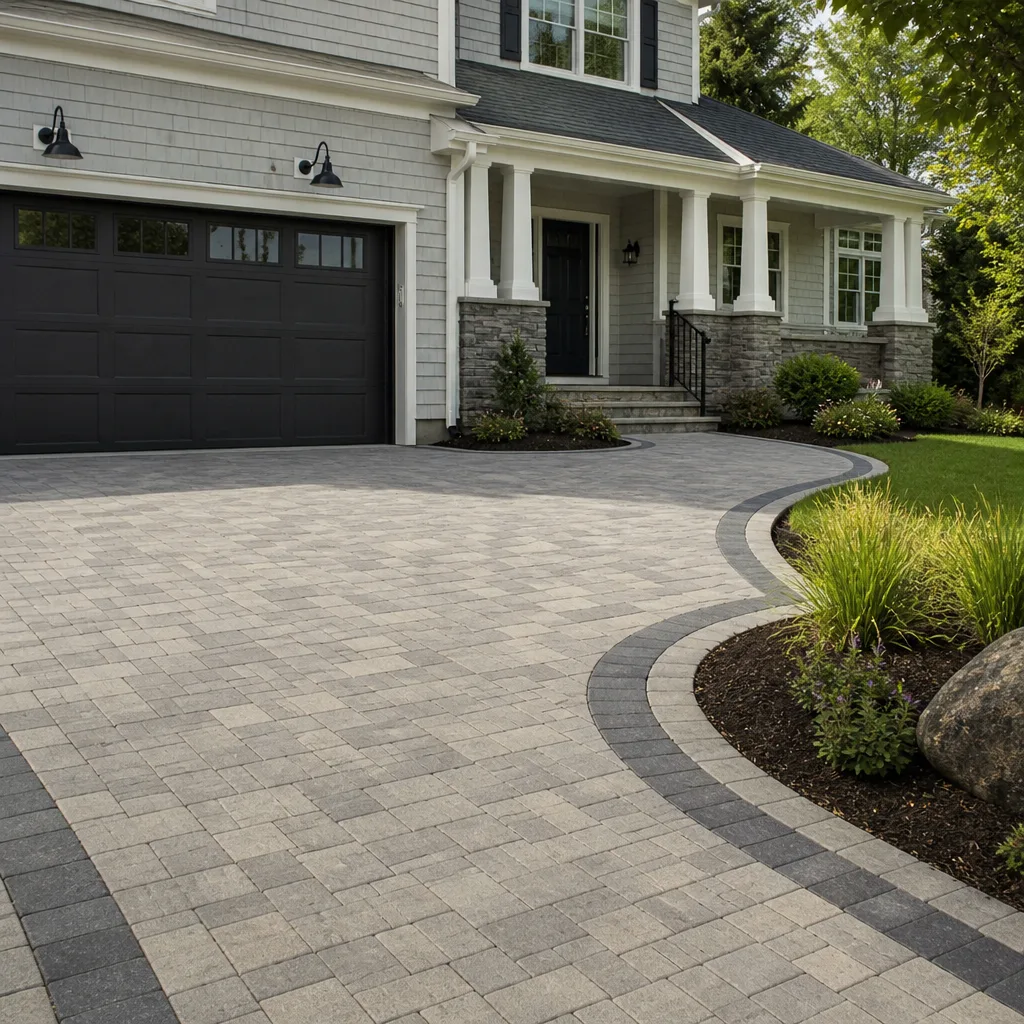 Driveway & pavers
 Kitchen remodeling
 Bathroom remodeling
 Home additions & ADU
 Roofing
 Windows & doors
 Fence
Free written scope consultation - allowances, timeline, and change-order rules on paper before a single trade is scheduled
Driveway & Pavers Troubleshooting in Yorba Linda: Common Problems and How to Fix Them
A single rocking paver isn’t a paver problem – it’s a base problem. That’s the first thing to understand, and it’s the idea most homeowners skip past when they reach for a pry bar and a bag of sand. Replacing that one loose paver without addressing what’s moving underneath it guarantees you’ll be back on your knees in the same spot within a couple of years. Every visible symptom on a Yorba Linda driveway (wobble, sand loss, white haze, spreading edges) traces back to a small number of root causes, and the fix depends entirely on which one you’re actually looking at. This guide walks through each one, how to separate a soil problem from a compaction problem, and how to decide between a spot repair and a full re-lay.
Quick Answer
Most driveway paver problems in Yorba Linda come down to four root causes: base failure from poor compaction or shifting clay soil, joint sand that’s too fine or wrongly installed for the traffic load, mineral haze from calcium in the local water, and edge restraints that have lost their grip. Spot repairs work when a single paver or a small section has failed and everything around it is still tight and level. A full re-lay is the only real fix when the base has lost integrity across a wide area.
Styles & brands we work with
- Kitchen remodeling
- Bathroom remodeling
- Home additions & ADU
- Roofing
- Windows & doors
- Driveway & pavers
- Fence
Table of Contents
- Diagnosing by Root Cause, Not Appearance
- Rocking and Sunken Pavers: Soil Shift vs. Poor Compaction
- Why Joint Sand Keeps Washing Out
- Efflorescence and White Haze in Hard Water Areas
- Edge Restraint Failure and Spreading Pavers
- The Decision Tree: Spot Repair vs. Re-Lay
- Choosing Replacement Pavers That Match
- Keeping a Yorba Linda Driveway Solid
Diagnosing by Root Cause, Not Appearance
Paver failures are like symptoms of a cold – several different problems can look almost identical from a standing height. A weathered driveway with a few loose pavers and washed-out joints could be suffering from a base problem, a sand problem, a drainage problem, or some combination. The mistake is treating the symptom you can see without understanding which cause is under it. Two minutes of honest diagnosis saves a lot of pointless sand-sweeping.
Here’s how we separate them before recommending anything. Walk the driveway and note:
- Wobble underfoot: one or two pavers that rock when stepped on = localized base failure or a poorly bedded paver. Multiple pavers rocking in a cluster, spreading outward = larger base issue.
- Depressions or humps: the surface is no longer flat. Small dips that collect water point to compaction and settling. A bulge that wasn’t there before points to a heaved or under-restrained edge.
- Wide, dark joints: sand has emptied out and water is running into the base. Common in Yorba Linda where driveways meet a slope or grade.
- White, chalky haze: efflorescence from mineral migration, not dirt. Never scrubs off cleanly.
- Edges spreading outward: the pavers along the perimeter have separated from the body, meaning the edge restraint has moved.
Each of these tells you a different story. Two of them (base failure and edge restraint) can require the same mechanical fix, and two more (sand loss and efflorescence) are almost always a finish-level issue. Being honest about which group you’re in is the whole game.
Rocking and Sunken Pavers: Soil Shift vs. Poor Compaction
Not all settlement is the same, and this is where Yorba Linda’s soil behaves unlike other parts of Southern California. Many neighborhoods here sit on heavy clay that expands and contracts with the wet-dry cycle. A paver that goes down on a base that wasn’t compacted enough to resist that movement will fail years before its neighbor does. The pavers themselves aren’t defective. The soil and the prep are.
Here’s how to tell the difference between soil-driven settlement and poor-compaction settlement:
- Look at the failure shape. A single small depression around one or two pavers that appears after a wet winter, with everything else tight and level, usually points to soil movement under a localized weak spot. A wider, flatter dip that follows a long line down the driveway usually points to a base layer that was never compacted in lifts.
- Check the timeline. Pavers that failed within a year or two of installation, before a heavy rainy season, almost always point to compaction. Pavers that failed after four or five years and after multiple wet-dry cycles more often point to soil movement.
- Probe the joint. Grab a screwdriver or a stiff piece of wire and push it into the joint sand beside the failed paver. If it drops into a void underneath, the base has opened up under a chunk of the driveway – a re-lay might be needed. If it stops firmly after the sand layer, you’re likely looking at a small spot issue.
- Watch the water. Where does runoff from the yard, the roof, or a neighbor’s slope go during rain? A driveway that carries more water than it should will settle faster than one with proper grading, particularly on Yorba Linda’s sloped lots.
The fix depends entirely on which one you’re in. Soil-driven settlement can often be corrected with a spot repair plus a small regrade around the affected area. Poor-compaction settlement across a wide zone usually means the base has to come open. Our team at Construction Yorba Linda approaches each driveway & pavers job by diagnosing this first, because repaving over a bad base is just spending money twice.
Why Joint Sand Keeps Washing Out
Joint sand keeps washing out for one of three reasons: it’s the wrong grade for the traffic, it was never fully activated in the joint, or water is finding a faster route through the surface than the sand can absorb. All three show up in Yorba Linda driveways, and all three are fixable. But if you just sweep a bag of play sand into the joints, it’ll wash out again in weeks. Fine sand has no bind to it.
What actually holds in a high-traffic driveway:
- Polymeric sand with the right grade. Cheaper bagged sand uses smaller particles that wash through joints under a car’s weight. In our experience, the polymeric grades that hold up best in Yorba Linda are rated for wide-joint and vehicular applications. Even among name brands, the “wide joint” product for foot traffic isn’t the same as the “vehicular” product for a car – ask for the latter.
- Proper activation. Polymeric sand has to be wetted correctly after installation, and the water has to reach the depth of the joint. A light mist doesn’t do it. The surface sets in a cured cap, but if the water didn’t penetrate fully, the bottom of the joint is still loose and the top crust breaks off under tires.
- Joint width consistency. Pavers installed with uneven joint widths leave a few wide gaps that catch and hold sand, while tight joints reject it. Over time the wide joints empty and the tight ones don’t, which is why some failures look random.
- Drainage. Where a Yorba Linda driveway runs downhill toward the street or garage, water moves through very fast. That’s a legitimate reason to consider a slightly different joint strategy or surface drainage rather than just more sand.
The right move is to re-sand with the correct polymeric grade, then evaluate whether the source of the water needs attention. If sand is washing out every wet season, that’s a drainage signal, not a sand signal.
Efflorescence and White Haze in Hard Water Areas
Efflorescence is a white or grayish mineral deposit that shows up as a haze, a powder, or a crust on the surface of mortar, concrete, or pavers. It’s not mold, it’s not dirt, and it’s not necessarily a sign of failed pavers – but it’s a very common complaint in Yorba Linda homes because the local water carries a fair amount of dissolved calcium. When pavers are wet repeatedly, mineral-laden water migrates into the paver body, evaporates out, and leaves the salts on the surface where they were pushed out. Twelve more wet-dry cycles later, you’ve got a haze.
Diagnosing vs. treating:
- Diagnose first. A white haze that scrubs back after water and vinegar but returns after a month isn’t necessarily efflorescence – it could be excess polymeric sand dust that wasn’t fully swept before setting. Efflorescence returns over weeks or months and looks slightly more crystalline.
- Treat with the right product. A dedicated paver or masonry efflorescence cleaner works far better than vinegar on a well-established case. Vinegar is fine for a light haze once, but doesn’t penetrate deeper crystals.
- Seal only after treatment, not before. Sealing over an efflorescence-active surface traps the crystals and makes things worse. Standard practice is to treat, wait, treat again if needed, then evaluate sealing.
- Consider a breathable sealer. A film-forming sealer can sometimes make the problem worse by trapping moisture. A penetrating, breathable sealer is often the better long-term choice in a hard water area like Yorba Linda.
The good news: efflorescence is cosmetic. It doesn’t hurt the structural performance of the paver. If it bothers you, handle it as a finish treatment. If it doesn’t, it’s not a hazard.
Edge Restraint Failure and Spreading Pavers
Every paver installation needs some form of edge restraint – usually a concrete or plastic edge piece that runs along the perimeter, or a paver soldier course with a proper bedding underneath. Without it, the paver field spreads outward a fraction of an inch each season until the pattern has opened up enough to send individual pavers loose. Yorba Linda’s clay soil pushes against edges during the wet season and lets them relax during the dry season, so edge restraint failure is genuinely more common here than in sandy-soil areas.
How to evaluate whether your existing restraint can be saved:
- Look for visible movement. Does the edge paver or edge piece rock independently of the field? Does a gap have opened between the edge piece and the field? If it moves, it’s failing.
- Check what’s under the edge. Concrete edge restraints that were cast with the base are much more durable than plastic or paver-only edges. If your edge is the plastic strip type and it’s more than a few years old, it may have simply cracked.
- Check drainage at the edge. Water running off the finished driveway often hits the edge and sits there. If the edge is in a constant wet spot, even a good restraint can fail over time.
- Try a reset first. Sometimes the restraint is intact but the field has spread into it. In that case, the fix is a reset, not a rebuild. A single re-lay of the edge course plus a fresh restraint usually solves it.
- Rebuild when the restraint itself is gone. If the concrete edge has cracked through or the plastic edge has broken in multiple spots, replacing it is the right call.
Edge failure is one of the cheapest major problems to fix when caught in time. It’s one of the most expensive when ignored, because the field spread eventually transfers load back through the whole surface and starts a base problem. Our team at Construction Yorba Linda treats edge restraint as a proper part of every driveway build from the beginning, and it’s one of the reasons a well-built hardscape outside one of our home additions & ADU projects holds up after the site work around it is finished.
The Decision Tree: Spot Repair vs. Re-Lay
Here’s the honest answer: some driveway paver problems are a spot repair, some require a re-lay, and a professional can usually tell which within a few minutes of looking. The factors that matter are how wide the affected area is, whether the base is compromised, and whether the pavers around the failure are still stable.
Use this list as a first diagnostic before you call:
- Spot repair is likely if: the failure is a single paver or a small cluster (one to five pavers), everything around it is tight, the joint pattern is still consistent, water drains away from the area, and no subsidence pattern repeats along a visible line.
- Partial re-lay is likely if: failure covers a strip or zone (a run of pavers along a wheel path or along a slope), the pavers around the failure are loosening season by season, or a single repeated line of failure appears across the surface. Partial re-lay opens the affected section, re-does the base, and reuses the same pavers.
- Full re-lay is likely if: multiple areas have failed, the surface no longer drains (puddles that were never there before), the edge restraint is failing across a long run, or the base is too shallow throughout. At that point, spending on spot repairs just delays the bigger project.
- Consider a different system if: this is the second time the same driveway has needed this level of repair. Sometimes a driveway is built in a way that never suited the site; a different paver thickness, drainage detail, or base strategy fixes it at the root.
If you’re unsure where you are on that list, call (888) 356-5940. We answer 24/7, with fast dispatch from 7am to 7pm, Sunday through Friday, and we can usually tell you which bucket you’re in from a photo or a short visit.
Choosing Replacement Pavers That Match
Matching existing pavers is one of those small jobs that becomes large if it goes wrong. A driveway that was installed with a specific paver line, color, and finish can be very hard to match after a few years because colors shift slightly with UV exposure. Yorba Linda’s sun does a lot to pavers over five or six summers. If you’re doing a partial re-lay or a spot repair and you want it to disappear visually, matching isn’t just about the catalog name.
What works in practice:
- Reuse the originals whenever possible. A partial re-lay where the same pavers are lifted, cleaned, reset, and reused on the same base pattern is always the best visual outcome. That’s why the smart money goes to re-laying, not replacing.
- Match the manufacturer line and finish, not just color. The same brand and “color” name can be a different finish between two product lines. Belgard, Unilock, Techo-Bloc, Tremron, and Cambridge Pavers all have color-matched lines, but a spot-match only works within the same manufacturing run or closest available match.
- Accept that a light blend is normal. When you have to introduce new pavers on an older driveway, a small percentage of new pavers blended across the pattern is the standard way to make it look intentional. Trying to slot new pavers into a tight cluster against a five-year-old surface usually stands out more, not less.
- Talk to a contractor with brand range. This is where consumers get burned by contractors locked into one line. Having access to the full brand range for pavers – Belgard, Unilock, Techo-Bloc, Tremron, Cambridge – is what allows a match rather than a forced substitution. That pattern holds across every trade we work in, whether it’s pavers, cabinetry from KraftMaid and Wellborn, or bath fixtures from Kohler and Moen. Spec’d to your standard, not ours.
The right answer for a struggling driveway is usually not “buy the closest thing and hope.” It’s “let’s see what the existing surface actually is, and re-lay the same paver on a fresh base if we can.” If the supply chain to your exact paver has dried up, we can usually find a match within the same manufacturer’s current lineup or blend a new paver into the field honestly.
Keeping a Yorba Linda Driveway Solid
The preventative work that keeps a driveway in good shape is genuinely small compared to the cost of an early re-lay. Yorba Linda’s wet-dry cycle does the heavy lifting on base deterioration, so the two priorities are keeping water away from the base and re-filling joint sand before the base gets exposed.
What you can do on your own:
- Re-sand joints each dry season. Even a properly laid joint will lose some sand over a season. A top-up before the rains is the single most effective maintenance step.
- Redirect water before it hits the driveway. Downspouts, gutter extensions, and yard grading that push water off the pavement instead of onto it can add years to the base. Look for the low point in the driveway and trace where the water goes from there.
- Watch the edges. If you see the perimeter start to creep, address it in the first season. Edge fixes get dramatically more expensive the longer they’re left.
- Keep vehicles off the edges. Heavy truck wheels on a short edge run accelerate restraint damage very quickly.
- Don’t seal too early in the year. Sealing over damp joint sand traps moisture and can worsen efflorescence. Wait for a fully dry stretch.
For the fence lines, gate posts, and other hardscape perimeter elements around a driveway, the same maintenance rhythm applies, and our fence installation work often sits right alongside a driveway project because the two share base and drainage concerns along the property line.
Common Mistakes to Avoid
- Sweeping play sand into joints. Fine sand has no polymeric bind and washes out within weeks in Yorba Linda’s rain. Always use a polymeric sand graded for vehicular joints.
- Fixing a single rocking paver without addressing the base. The paver will be rocking again within a couple of years. If the paver moves, the base under it has moved – solve for that, not for the paver.
- Sealing over efflorescence. A sealer applied to an active haze traps moisture and crystals, making it come back stronger. Treat first, seal later.
- Ignoring edge creep. A spreading driveway is not cosmetic. Once the field moves, base failure follows, and that turns a small fix into a large one.
- Using the wrong polymeric grade for the traffic. A wide-joint pedestrian grade in a car path is a common mismatch. The right grade is the one rated for the load.
- Assuming color match will work from the catalog. UV shifts a five-year-old driveway in Yorba Linda noticeably. Match the manufacturer line and the finish, or plan a light blend rather than trying to slot a new paver into a tight cluster.
- Letting water sit. A driveway that puddles is telling you something about grading or drainage. Adding sand doesn’t change where the water goes.
See the difference
 Before
 After
 Before
 After
 Before
 After
When to Call a Professional
Call a professional when the failure involves more than a single paver, when the pavers around the failure are also rocking, when the edges are spreading, when water has begun puddling in a spot that used to drain, or when efflorescence keeps returning after treatment. Structural base work and edge restraint replacement require a proper compaction and finishing process – spot repairs done without a base repair don’t hold, which is what keeps the problem coming back.
Construction Yorba Linda offers free estimates in Yorba Linda. Call (888) 356-5940. We answer 24/7. Fast dispatch from 7am to 7pm, Sunday through Friday. The estimate is free, the price is set per job by the written estimate, and we pull permits where the work requires it. For a broader look at what our team does across the property, from the driveway to the roofline, see Construction Yorba Linda.
Frequently Asked Questions
Paver repair costs vary, and the honest answer is that it depends on whether you’re looking at a spot repair, a partial re-lay, or a full re-lay. A single paver replacement is typically the lowest tier. A partial re-lay with a fresh base underneath the affected section is a step up. A full re-lay of the driveway is the largest project tier. The written estimate sets the price. Call (888) 356-5940 for an exact quote – estimates are free.
You can, but only if you’re willing to address the base underneath it, not just the paver. If you lift the paver and find solid, compacted material right below it, a reset may work. If you find a void or loose material, that has to be dug out and re-based. When in doubt, get a professional assessment first. A bad spot repair where the base is the real problem will have the same paver rocking again after the next rain.
The white haze is almost certainly efflorescence, a mineral deposit driven by moisture moving through the paver body. In Yorba Linda specifically, the local water carries calcium that gets left behind on the surface after evaporation. It’s cosmetic, it’s not a structural problem, and it can be treated with a dedicated paver efflorescence cleaner. Repeated treatment with a breathable sealer afterward is often the way to keep it from coming back. Call (888) 356-5940 if you’d like us to look at it – estimates are free.
Not the way we run a job. The written estimate sets the final price. If we open up a section and find something truly unexpected (a deeper base problem than the initial survey showed), we tell you before proceeding, and the estimate is revised in writing. No surprise numbers on the back end.
A spot repair on a single paver or a small cluster is usually a partial-day job once materials are on site. A partial re-lay of a section is typically one to three days depending on size, curing time for the polymeric sand, and drainage work. A full re-lay across a two-car driveway runs longer, and the estimate will spell out the timeline. Call (888) 356-5940 to schedule a site visit – estimates are free.
Permit requirements depend on the scope of the job and the specifics of the site. For simple paver repair, a permit is often not required; for full replacement that involves grading changes, drainage modification, or changes to the connection at the curb, permits may be required by the city. Before starting work, we confirm what the city requires for the specific project. The estimate will note what we’ve confirmed with the local building department.
The Bottom Line
Almost every driveway paver problem in Yorba Linda comes back to one of four root causes: base failure, joint sand loss, efflorescence, or edge restraint failure. The visible symptom tells you which one you’re in if you know how to look at it, and that determines whether a spot repair will hold or whether a re-lay is the only real fix. Spot repairs work in a small cluster with stable surroundings and an intact base. Partial or full re-lays are the honest answer when the base has moved or the edges have failed. Diagnose the cause before you reach for the pry bar, address the base before the surface, and the driveway will hold up through the wet seasons. One contractor, every trade – from the driveway to the roofline.
Written by the team at Construction Yorba Linda.